A Message From the Executive Director
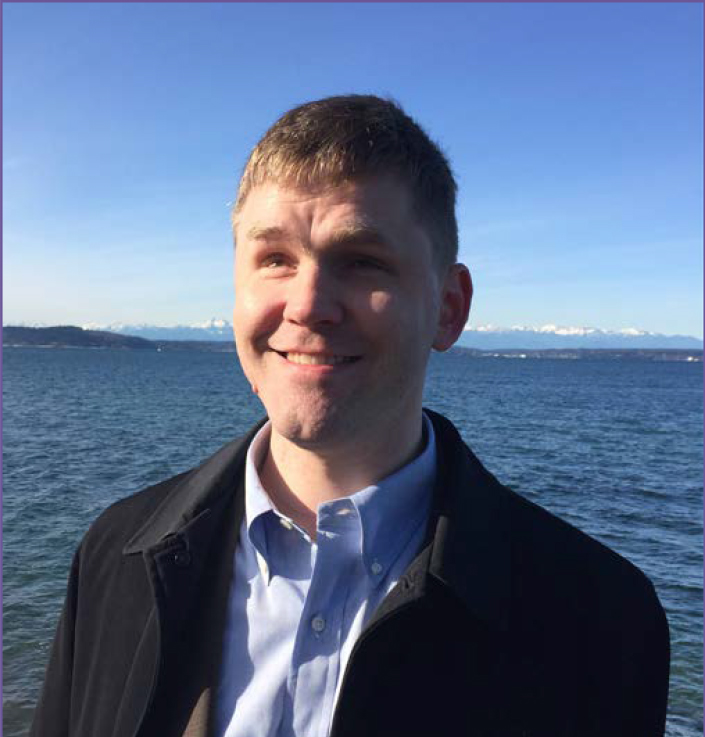
In the spring issue of Inside ACB, I shared some information about major accomplishments in 2018, including the establishment of The Legacy Endowment Fund which, over time, will allow ACB to perpetuate our work for many years into the future. Per our investment policy, bequests and other planned gifts will be added to this endowment fund, ultimately providing ACB with financial stability in the years to come. Moreover, I’ve worked hard to establish corporate partnerships. In collaboration with Cisco, we helped them modify their telephone software, so their hand-held devices could be used by blind people — an important advancement, as call center work is often a good employment outcome for someone with a vision impairment. So, that particular outcome is all about jobs and addressing the horrific under/unemployment rate of blind people, which stands at a staggering 70 percent. In addition, in 2018, we launched ACB.org version 2.0. With this new and improved website, people visiting our website can gain information about vision loss, the myriad of programs and services ACB offers, how to reach our staff, etc. and is now more strategically laid-out and functional. As we continue to achieve successes, I will be sure to communicate them to all of you, as it is your generosity that enables ACB to successfully fulfill our mission and, for that, we are all most grateful!
ACB Applauds House on Final Passage of Marrakesh Treaty
The American Council of the Blind applauds the U.S. House of Representatives after passage of the Marrakesh Treaty Implementation Act. The House vote moves the implementing legislation to the President’s desk for his signature, and the treaty to the State Department for final preparation of the diplomatic papers allowing the U.S. to become one of the official Marrakesh countries committed to the expanded availability of accessible published works from around the world.
“We’re excited that Congress was able to move Marrakesh over the legislative finish line during its final days of business before leaving for the October recess,” said ACB President Kim Charlson. “But what is most exciting is that U.S. citizens who are blind or have other print disabilities will soon be able to have access to special format materials available in other countries in English and other languages, as well as people with all types of print disabilities around the world who will soon be able to gain access to American published works for the first time in an accessible format.”
“We’ve had a countless number of advocates who have helped make this treaty a reality in the United States,” said ACB Executive Director Eric Bridges. “We wish to thank the U.S. Congress, particularly House Chairman Goodlatte and Senate Foreign Relations Chairman Bob Corker for showing true leadership by shepherding this treaty through the legislative channels.”
The Marrakesh Treaty was the product of years of deliberations between the World Intellectual Property Organization (WIPO), publishers, libraries, and disability rights advocates. The treaty was a response to the grave concerns over the cumbersome international copyright laws that make it difficult to gain access to published works in accessible formats like braille or audio format.
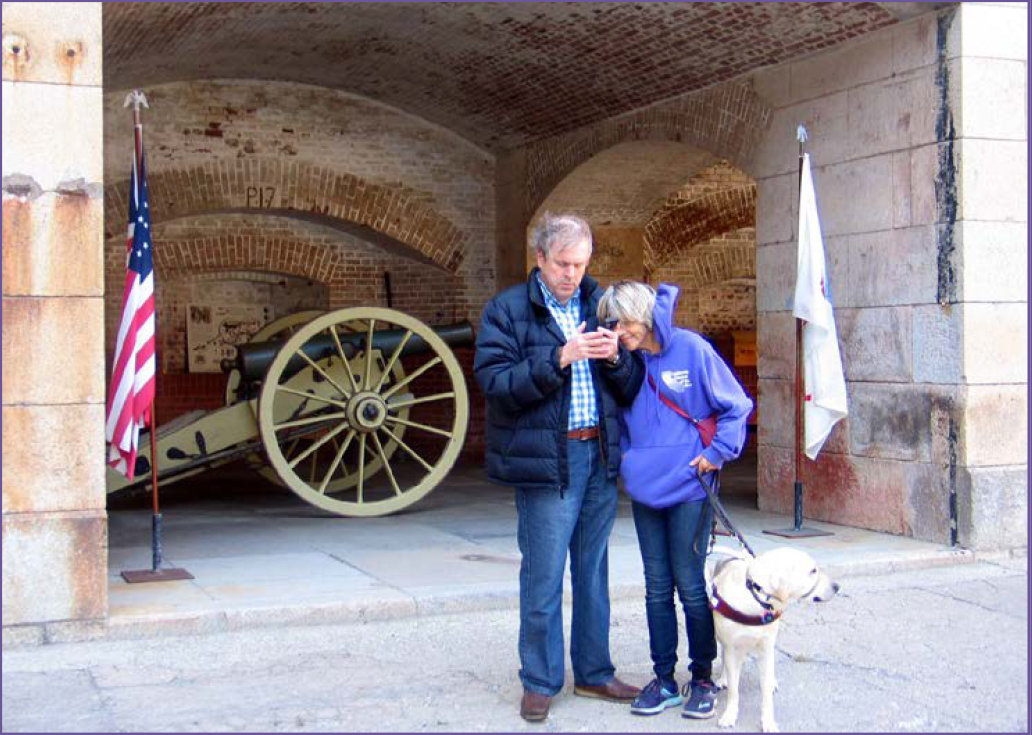
stand in front of a brick casement housing a civil war cannon
as they listen to audio description of Fort Point on the UniD app.
Good News for National Park Visitors
ACB is excited to announce that Google will continue its funding of the University of Hawaii UniDescription Project in 2019 with a $100,000 award. This national research project focuses on media accessibility and brings together collaborators at the National Park Service, Harpers Ferry Center, and the University of Hawaii. The original 2017 $75,000 grant was used to audio describe print brochures at 15 National Park Service sites in California. The principal tool used to deliver description is the free, open-source UniD mobile app for Android and iOS operating systems. The National Park service has provided valuable in-kind support through ranger-led tours, tactile elements, and additional on-site audio description.
California Council of the Blind members have served as app testers, providing feedback after visiting park sites. In late August, Silicon Valley Chapter members John and Susan Glass tested Fort Point National Historic Site’s new audio-described brochure. Fort Point, the “Gibraltar of the West,” sits directly below the Golden Gate Bridge, so they were treated to the sounds of bridge traffic overhead, cargo ships’ warning signals, and raucous seagull cries while hearing the description of the fort itself. As part of the tactile tour, Ranger Nate Tusa described the intricate details of the 1684 San Martin cannon as the Glass’s explored its ornate decoration.